


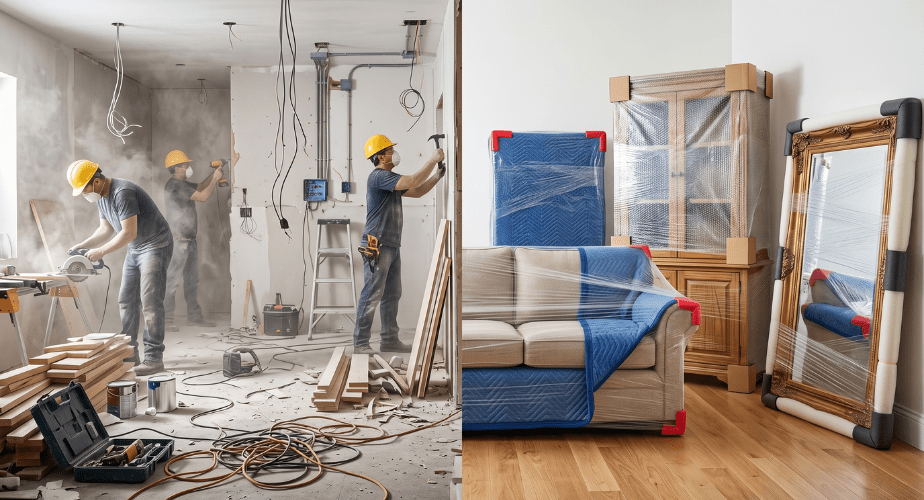
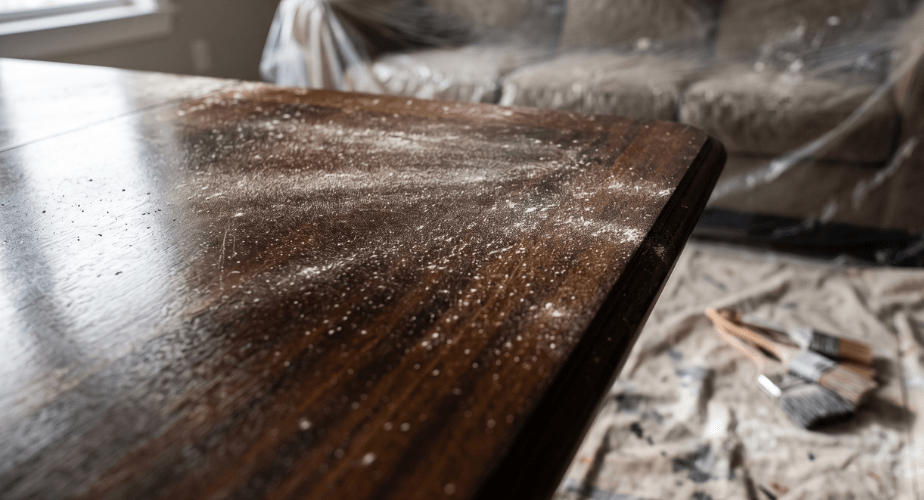
During renovation work, dust infiltrates even the best-protected corners, despite all the usual precautions. It settles as a thin film on wood, fabrics and even inside drawers and cupboards. Furniture is exposed to knocks, scratches, paint splashes and moisture, whether from glue, seepage, drying walls or the simple act of leaving a window open. Where space is at a premium, furniture is frequently moved from one room to another, multiplying the risk of bumping into walls, feet being ripped off or parts being damaged. The repeated movement of craftsmen, equipment and materials further increases the likelihood of accidents or irreversible damage. What’s more, some renovation materials can release solvents, odors or residues that impregnate textiles and foams.
Protecting your furniture is therefore essential to preserve its condition, avoid unpleasant surprises, save time on final cleaning and leave your home looking impeccable at the end of the job.
Common renovation mistakes
Many homeowners believe that a simple tarp is enough to protect their belongings. However, even a thick tarp allows fine dust to pass through (against which Suva recommends taking protective measures) and often does not fully cover the furniture. It does not cushion impacts, protect against paint splatters, or prevent chemical spills. Furthermore, a poorly ventilated plastic tarp can promote condensation, trap moisture, and lead to mold growth or stains. Others choose to pile furniture into a single room, but this solution increases the risk of scratches from rubbing, damage from being crushed under weight, or warping of fragile items. The living space then becomes unusable, which complicates daily life, especially for families. It’s also common to underestimate the duration of the work or the potential for damage: water damage, a dropped tool, a clumsy move, or a paint spill can ruin everything in a matter of seconds and result in unexpected repair costs. If protecting your belongings on-site seems too risky, don’t hesitate to explore the benefits of renting a secure storage unit during your renovation project.
What are your furniture storage options?
Several solutions exist, each with its own advantages and limitations:
- The basement: Often damp, poorly ventilated, and not very secure, it exposes furniture to mold and theft. If you’re still deciding between a basement and a storage unit, keep in mind that basements are particularly not recommended for storing textiles, solid wood, or valuables.
- the garage: practical for short stays, but usually shared, cluttered or difficult to access. It rarely offers a clean, humidity-stable environment.
- at a relative’s home: a welcome option for a one-off solution, but depends entirely on availability, trust and space. This can quickly become cumbersome and a source of tension.
- Traditional self-storage: a secure solution, suitable for long-term storage, but more expensive and restrictive (see our comparison of self-storage and rental storage units to analyze the differences in flexibility and pricing)
- self-storage: accessible, flexible, modular in size, secure, clean and suitable for all volumes. It’s the ideal option for renovators who want to stay in control of their belongings, manage access at their own pace, and adjust the duration as the work progresses.
What is self-storage and why consider it?
Self-storage involves renting an individual space (cubicle) of the size of your choice, for as long as you need it. Access is free, often 7 days a week, and you can drop off or pick up your furniture at will. The advantages are many: optimal security (video surveillance, controlled access), total flexibility (monthly or weekly contracts), cleanliness and protection against humidity. Self-storage is a modern solution, adopted by both private individuals and professionals working on construction sites.
What types of furniture are most at risk?
Solid wood furniture can crack due to moisture, repeated impacts, or being moved too abruptly. Prolonged exposure to an unstable environment can cause the wood to warp, swell, or crack. Textiles (sofas, mattresses, armchairs, curtains) absorb dust, construction odors, smoke, and moisture, which promotes the growth of mold and dust mites. They are also at risk of permanent staining if exposed to paint or product splashes. Electronic, hi-fi, and computer equipment—which is highly sensitive to fine dust—may malfunction or suffer corrosion of internal components due to moisture or sudden temperature changes. Works of art, mirrors, decorative items made of glass or porcelain, as well as valuable objects, are particularly vulnerable to accidents, impacts, dirt, scratches, or chips. Protecting these items must therefore be a priority during a renovation: this ensures their preservation and prevents repair or replacement costs that can sometimes be very high. Also consider storing your furniture in a storage unit to protect it from unexpected damage during construction. For your small decorative items and books, the best protection against construction dust is to pack them in boxes: be sureto use sturdy cardboard boxes and seal them securely with tape.

How do you prepare your furniture for storage?
Before storing, dismantle furniture if possible to reduce the amount of space required, reduce the risk of breakage and make it easier to handle. Remember to take photos before disassembly to facilitate reassembly later, and keep the assembly instructions if available. Clean each component thoroughly to avoid the proliferation of stains, unpleasant odors or mold during storage. Dry surfaces thoroughly, especially textiles and metal parts, to prevent rust or deterioration.
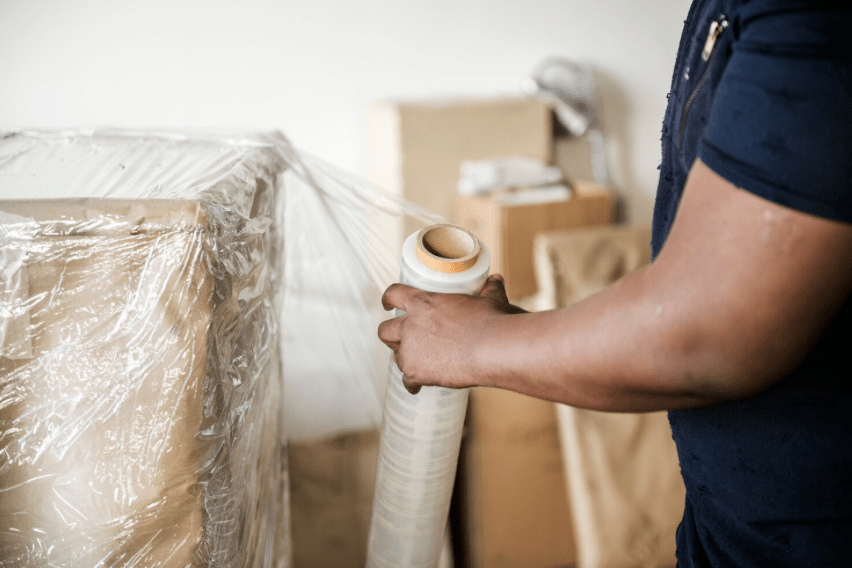
Protect each room with bubble wrap, blankets, sheets or special covers, paying particular attention to corners and sensitive surfaces. For wooden or leather furniture, use breathable materials to avoid condensation. Pack small parts (screws, handles, fasteners) in labeled bags and tape them to a corresponding part of the furniture to avoid losing anything. Finally, before covering or storing your furniture, you’ll obviously need to empty it and protect your fragile items: feel free to check out our step-by-step guide to packing boxes successfully. Be careful, however, when sorting through your belongings: while your storage unit may be perfect for your furniture, leftover paint, solvents, varnish, and construction cans are strictly prohibited from storage.
To optimize volume inside the cubicle, place heavier objects at the bottom and lighter ones on top. Store mattresses, box springs or large panels vertically to save space and avoid prolonged pressure points. Don’t stack too high to crush or deform fragile furniture. Always provide an access path into the storage unit so that you can easily retrieve certain items of furniture or boxes without having to move everything. Leave the items or boxes you need most at the front of the box for convenient access.
How long can you store your furniture?
Storage time depends on the site:
- for small jobs (painting, flooring), just a few days or weeks are enough
- For a major or complete renovation (particularly as part of the renovation and energy efficiency programs supported by SuisseÉnergie), you should often plan for 1 to 3 months, or even longer. Modern self-storage solutions, such as Stockeet, offer flexible contracts that can be renewed weekly or monthly, which is perfectly suited to the unpredictability of construction projects.
Why choose stockeet to store your furniture?

Stockeet offers storage units ranging from 1 to 23 m², available immediately and with no long-term commitment. The facilities are monitored 24 hours a day, accessible 7 days a week, well-ventilated, and spotlessly clean. The flexibility of the contracts allows you to adjust the storage duration to match the progress of your construction project, with no surprises or hidden fees. Personalized support helps you estimate the size of the storage unit you need and prepare your items for storage under the best conditions. Stockeet is the ideal solution for temporary, secure, and convenient storage during your construction project.
Need a temporary space while your renovation is underway? Contact us . Are you planning a renovation? Protect your furniture and enjoy peace of mind.
📞 Contact us today on: 021 800 30 00

