



How do I insure my belongings in a Swiss storage unit?
The storage market in Switzerland has undergone a profound transformation, shifting from traditional storage facilities with sealed wooden crates to ultra-modern “self-storage” centers accessible via a mobile app (learn more about the legal differences between traditional storage facilities and self-storage units). This evolution responds to growing demand linked to life transitions: moving, renovations, or temporary relocations abroad. However, one area of uncertainty remains:
insurance coverage for these stored belongings. Unlike insurance for a primary residence, which is governed by standardized practices, insurance for stored belongings operates in a contractual gray area where the renter often loses out in the event of a claim. The challenge is not just finding a storage unit, but ensuring that the assets it contains remain financially protected against unforeseen events. This report analyzes the protection mechanisms, the legal pitfalls of the Federal Law on Insurance Contracts (LCA), and the specific provisions of Swiss federal law to offer a foolproof coverage strategy.
The illusion of automatic household insurance coverage
The most common belief is that household property insurance (liability insurance) automatically covers belongings wherever they may be. This is a dangerous half-truth. While modern policies include “territorial validity” clauses, these are strictly limited in time and space.
The territorial validity clause and its temporal limits
Standard insurance policies (AXA, Mobilière, Zurich) generally cover property that has been temporarily moved. However, the term “temporary” is interpreted narrowly.
- Moving: When changing your place of residence, coverage is often maintained at both addresses (old and new) for a limited period, typically 30 to 60 days, depending on the terms and conditions. After this period, any property remaining at the old address or in transit is no longer covered unless a rider is added.
- Long-term storage: For storage exceeding 3 months, most insurers consider this to be an “increase in risk” or a new location of risk requiring a specific policy or a paid endorsement. Failure to disclose this storage constitutes a material misrepresentation under Articles 4 et seq. of the Insurance Contract Act (LCA), allowing the insurer to reduce or deny benefits.
The sum insured trap and the proportional rule
One of the major financial risks is underinsurance. The sum insured listed in your home insurance policy must correspond to the replacement value of all your belongings (home + storage unit). If you store CHF 20,000 worth of furniture in a storage unit while also living in a furnished apartment, this value is added to the total. In the event of a claim (even a partial one, such as a burglary at home), if the adjuster determines that the actual total value (home + storage unit) exceeds the insured amount, the compensation will be reduced in proportion to this “degree of underinsurance.”
| Situation | Actual value total | Sum insured | Loss (Theft) | Compensation n | Loss |
| Correct | 100,000 chf | 100,000 chf | 10,000 chf | 10,000 chf | 0 chf |
| Underinsurance | 150,000 chf | 100,000 chf | 10,000 chf | 6,666 chf | 3,334 chf |
The subtle exclusion of simple theft outside the home
A legal distinction must be made between “simple theft” and “burglary”.
- Break-in: involves the use of force against the building or locking device (cut padlock, forced door). This is generally covered in secure storage facilities.
- Simple theft: disappearance without trace of forced entry (e.g. poorly locked door, stolen access code, opportunistic theft during loading). This risk is often excluded from basic policies for goods stored elsewhere than at home, or subject to very low ceilings (e.g. 2,000 to 5,000 chf) via the “simple theft outside” option.
Environmental risk analysis: the invisible enemy
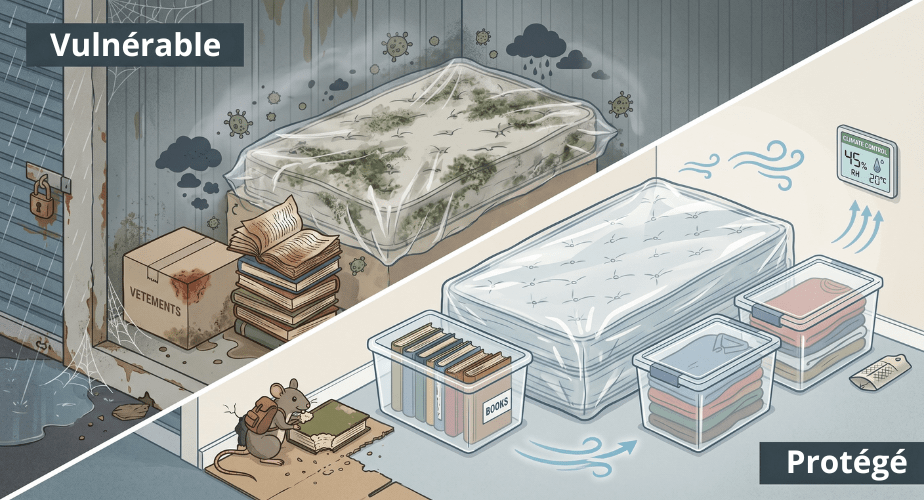
While theft is a major concern, statistics show that environmental damage (moisture, rodents) is common and, worse still, is often excluded from insurance coverage.
Mould and temperature variations
The general terms and conditions of home insurance providers (such as Zurich or AXA) cover sudden “water damage” (such as a burst pipe or water seeping through the roof). However, gradual damage caused by ambient humidity, condensation, or mold is almost always excluded, as it is considered a failure to maintain the property or a structural defect. In an unheated or poorly ventilated storage unit (such as an outdoor shipping container or a private basement), temperature fluctuations create condensation that can destroy mattresses, books, and clothing in just a few weeks. No insurer will reimburse you for these losses. If you’re unsure about the best place to avoid these risks, check out our comparison of basements versus rental storage units to make the right choice. Choosing a provider like Stockeet that offers humidity monitoring is therefore the only real “insurance” against this risk.
Pests and storage hygiene
Damage caused by rodents (rats, mice) or insects (moths) are also classic
exclusions of household insurance policies and insurance offered by rental companies. The only defense here is
prevention (Stockeet regularly uses preventive anti-mite solutions).
rodents and insects to protect storage): avoid banana boxes (which attract
insects), prefer hermetically sealed plastic bins and check the
storage center’s pest control protocols.
Dedicated insurance solutions for service providers
Given the gaps in personal insurance coverage, self-storage operators in French-speaking Switzerland offer their own insurance products, which are often contractually required if the customer cannot prove that they have third-party coverage.
Group contract architecture
These insurance policies are group policies negotiated by the lessor (the policyholder) with an insurance company (the insurer) on behalf of the customers (the insured). Many market players partner with major Swiss insurance companies such as La Mobilière, Helvetia, and Baloise.
- Advantages: Subscription is immediate, with no waiting period. Coverage is specifically tailored to the “box” risk (sometimes including theft without visible break-in if the center’s alarm system is activated).
- Costs: The pricing model is linear, often around 5-10 chf per month for 10,000 chf of insured capital. Although simple, this cost can be higher than a household policy extension (often 20-50 chf/year for a capital increase).
Compensation limits and ceilings
These policies have strict coverage limits. Some basic policies limit automatic coverage to approximately 4,000 CHF for a standard premium, with notable exclusions such as cash, jewelry, stamps, and precious metals. It is essential to declare the total actual value.
In the event of a total loss (fire at the center), the compensation will never exceed the amount declared on the enrollment form, even if the actual loss is ten times greater.
Stockeet’s transparent approach: insurance freedom
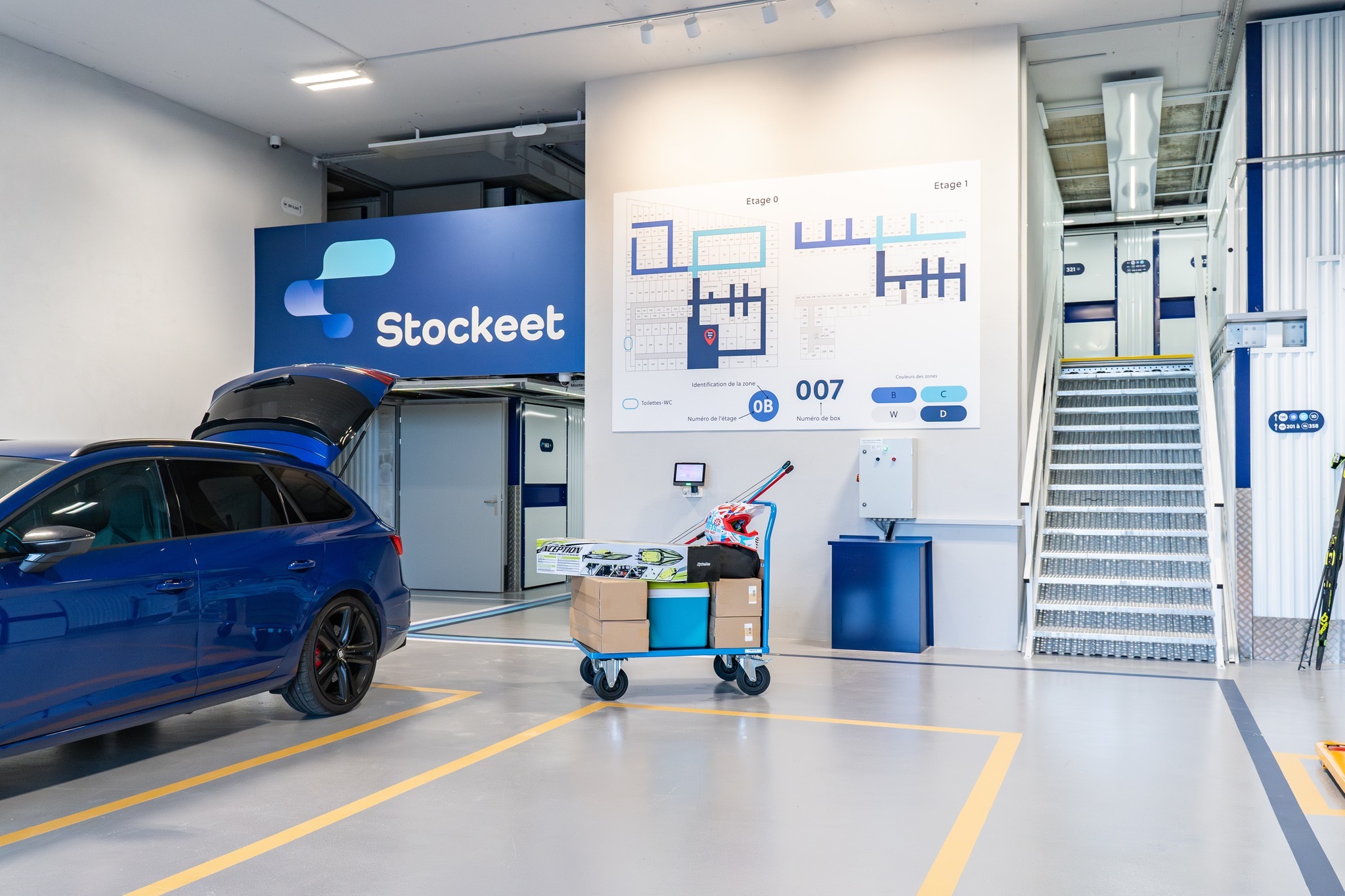
Contrary to certain market practices, Stockeet has chosen not to sell insurance products, prioritizing its customers’ freedom. The terms and conditions stipulate that it is the tenant’s responsibility to insure their belongings. This strategy offers two major advantages for users:
- Savings: The customer is not obliged to take out “duplicate” insurance. They can simply extend their own household insurance (often at a lower cost) or choose a specialist insurer of their choice.
- Security as a guarantee: To reassure third-party insurers and facilitate coverage, constant hygrometric control and 100% digital access via mobile application are high proof of diligence in the event of a claim, simplifying compensation procedures.
A Unique Feature of the Swiss Cantons: The ECA Monopoly
Swiss federalism creates a formidable trap for policyholders, particularly in French-speaking Switzerland.
Coverage for fire and natural hazards (flooding, hail) depends on the canton where the property is located.
The Case of the Cantons of Vaud, Fribourg, Jura, and Neuchâtel
In several French-speaking cantons, fire and natural disaster insurance for household contents is a mandatory state monopoly. This is the case in the canton of Vaud withthe Établissement Cantonal d’Assurance (ECA), the canton of Fribourg (ECAB), the Jura (ECA Jura), and Neuchâtel (ECAP).
- Risk scenario: You live in Geneva (open market) and store furniture in a storage facility in Lausanne (ECA monopoly market). Your Geneva home insurance policy (e.g., AXA Geneva) covers theft and water damage in Lausanne, but not fire. You must declare these items to ECA Vaud and pay the corresponding premium. Without doing so, if a fire breaks out at the storage facility, your belongings will not be insured against fire, as private insurers are legally prohibited from covering this risk in these cantons.
- Temporary storage outside the canton: Cantonal establishments generally cover their policyholders’ belongings when they are temporarily moved outside the canton, but this tolerance has time limits that must be validated.
The Case of the Cantons with a Free Market (Geneva and Valais)
Conversely, the cantons of Geneva and Valais do not have a cantonal monopoly for movable property. The market there is completely free: your private home insurance company can cover all risks (including fire) for property stored in these cantons.
Building vs. contents insurance
Do not confuse building insurance (which covers the walls of the storage facility and is mandatory for the owner) with contents insurance (your personal belongings). If the roof collapses under the weight of snow (a natural cause), the renter’s building insurance will cover the cost of rebuilding the roof. It is your contents insurance (ECA or private, depending on the canton) that will have to compensate you for your damaged furniture. There is no automatic recourse against the landlord unless there is proven gross negligence in maintenance.
Comparison table: household insurance vs. rental insurance
| Criteria | Household Extension Insurance | Specific rental insurance |
| Cost | Low (often included or low surcharge) | High (5-120 chf/month depending on volume) |
| Fire coverage | Yes (except cantons with ECA monopoly) | Yes (often via partner) |
| Flight cover | Burglary only (often) | Sometimes wider (internal flight) |
| Claims management | Single point of contact (your broker) | Third-party manager (lessor’s insurance) |
| Proof of value | Personal inventory required at time of loss | Flat-rate declared value (please note ceilings) |
| Duration | Limited (often < 1 year away from home) | Flexible (lease term) |
Practical guide: procedures and security
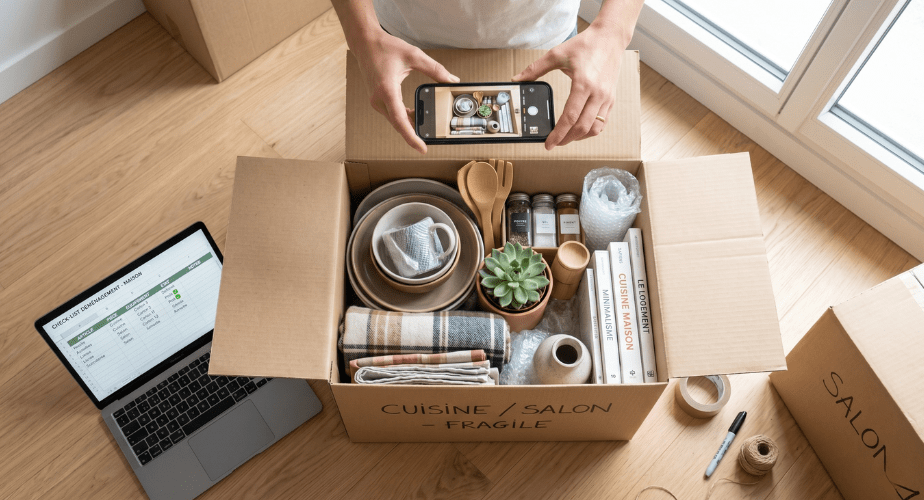
Contract law must be accompanied by practical measures to ensure effective compensation. The burden of proof always rests with the insured (Art. 39 LCA).
1. Proactive valued inventory
Don’t wait for a claim to list your possessions. Memory is fallible and insurance adjusters skeptical.
- Create an excel spreadsheet listing each item or box with its replacement value as new.
- Take photos of each opened box, then of the filled box, and finally of the locked box with the padlock in place (proof of security).
- Store these proofs digitally (cloud), never physically in the cubicle itself.
2. Declaration of value: new or market value?
Check whether your contract covers “replacement value” (the price you would pay to buy the item new today) or “market value” (residual value). For stored furniture, the difference is colossal. A 5-year-old sofa has a market value close to zero, but will cost 2,000 chf to replace. Swiss household insurances give priority to replacement value, unlike some logistics insurances based on weight or market value.
3. Key, padlock or digital access management
In the event of theft without forced entry (the box is empty but the lock is intact), compensation is compromised. Never share your access codes or keys. If you use a modern service with digital access management such as Stockeet, zebrabox or certain easystock sites, digital traceability will serve as proof: if your account opened the door at 3 a.m. while you were asleep, this is a strong indication of piracy or code theft, requalifiable as electronic breaking and entering.
Conclusion: a hybrid approach for total security
Insuring your belongings in storage in Switzerland means getting away from passivity. The easy option (taking out the lessor’s insurance) is costly but reassuring for short-term storage. For long-term storage, it is financially far more advantageous to include your belongings in your personal household policy (by adjusting the sum insured and checking the out-of-home clause).
In any case, remember that insurance covers unexpected financial losses, but it can never replace sentimental value. Choosing a provider that meets the safety standards of reliable facilities (access control, ventilation, fire detection) remains the best form of preventive insurance.
Final checklist before signing the lease
- Inform your household insurer of the new risk location and stored value.
- Check the canton of storage (if vaud/fribourg/jura/neuchâtel -> contact the cantonal establishment).
- Check contract exclusions (mold, rodents, valuables).
- Adjust the total sum insured to avoid the proportional rule.
- Document initial condition with photos and costed inventory.
📞 Contact us today on: 021 800 30 00

